Epigenetic Aging: Clinical Strategies and the Role of Nutrition and Lifestyle
- Jun 15, 2026


By Amy Doyle, MS, CNS+
Biological age isn’t the future of care — it’s already reshaping patient expectations today. Patients are prioritizing their health span, and the demand for biological age assessments is expected to triple over the next ten years.
Most patients already understand the value of good nutrition, quality supplements and a balanced lifestyle. But what if these habits could do more than support day-to-day wellness — what if they could actually slow down or even reverse biological age?
A new pilot study published in the ACNEM Journal (September 2025) explored exactly that. Over just 90 days, researchers tracked how structured nutrition, supplementation and lifestyle program affected participants’ biological age using advanced DNA methylation tests. The results were eye-opening: participants reduced their biological age by an average of 2–9 years, depending on the biomarker used.
Here’s what that means and why it matters.
Chronological age is how many years a person has been alive. Biological age, however, reflects how fast a person’s cells are aging.
Scientists measure this using “epigenetic clocks that read DNA methylation patterns. These chemical tags on your DNA change with lifestyle, stress, sleep and nutrition adjustments. Certain clocks estimate overall biological age (like Horvath and PhenoAge), while others measure the pace of aging or cellular changes.
In this study, four clocks were used:
Forty-one adults, aged 30–81, completed a three-month holistic protocol that included:
1. A structured whole-food nutrition plan
2. Daily movement and strength training
3. Targeted supplement support
Participants received a blend of supplements including:
These ingredients target core “hallmarks of aging,” including oxidative stress, mitochondrial decline, inflammation and epigenetic alterations.


PC PhenoAge
In short, participants became biologically younger and accumulated less cellular changes in just 90 days.
This wasn’t a single “magic bullet”, it was a synergistic lifestyle approach that targeted multiple aging pathways:
Methylation and Nutrition SupportMethylated B vitamins support DNA methylation, stress-hormone metabolism, and genomic stability. A vegetable-rich diet provides polyphenols that influence epigenetic regulation.3‡
Polyphenols and Cellular DefenseResveratrol supports healthy cytokine balance, improves metabolic markers, and helps to scavenge free radicals which are responsible for skin aging--thanks to its antioxidant activity. Sulforaphane activates the Nrf2 pathway, improving detoxification and antioxidant capacity.‡
Mitochondrial HealthUbiquinol boosts energy production and reduces oxidative stress. Nicotinamide riboside increases NAD+, a coenzyme essential for DNA repair, mitochondrial function, and cellular resilience.‡
This multi-modal strategy addressed key hallmarks of aging simultaneously, resulting in meaningful biological rejuvenation.


If your patients already value supplementation and healthy living, this study reinforces something powerful:
Small, consistent daily habits can significantly influence how fast the body ages at the cellular level.
This research shows that:
While more research is needed, the message is clear; daily lifestyle choices are one of the most powerful tools available for extending health span.
This content is an adaptation and summary of Furness D, Taylor P, Three-Month Nutritional and Lifestyle Intervention Reduce Biological Age: A Pilot Study Using DNA Methylation Clock. ACNEM Journal 2025 Sep; Vol 44, No 3.
It is not authored, endorsed, or reviewed by the original researchers or publishers. The information is provided for educational purposes only and should not be relied upon as a substitute for professional advice, diagnosis, or treatment. Accuracy and completeness are not guaranteed. Always refer to the original source and consult a qualified professional for guidance specific to your situation.


By: Amy Doyle, MS, CNS+
As we age, supporting brain health and cognitive function increasingly becomes a focal point of our health. Mild memory deficits and slower cognitive processing are a normal part of aging. It has been estimated that 1 in 9 adults in the US age 65 and older experience memory loss, thinking difficulties and other cognitive changes that could interfere with daily life and activities.1
By age 45, the risk of these types of cognitive changes is 1 in 5 for women and 1 in 10 for men.1
Read on to discover how you can proactively target metabolic processes and related pathways to support your patients’ brain health and cognitive function throughout their lifetime.
Changes in brain neurons can begin 20 years or more before cognitive symptoms develop, with the prevalence of these changes doubling every five years after age 65.1,2
Age-related chemical and physical changes in the brain can include:3
While these underlying brain changes can occur for decades, one factor is emerging as a significant player in the development and occurrence of cognitive changes: oxidative stress.
Oxidative stress occurs when there’s an imbalance between free radicals and antioxidants in the body resulting in greater reactive oxygen species (ROS) production. Free radicals are a natural byproduct of many physiological processes, but they can also be introduced by external sources like diet, toxins and environmental factors.
While free radicals play essential roles in cellular signaling and immune function, an excess can lead to cellular damage, an immune response and mitochondrial dysfunction that can progress to adverse effects on brain function.4 Highly metabolic, the brain is a large consumer of oxygen and is rich in polyunsaturated fatty acids. These characteristics combined with its high production of ROS and low levels of antioxidant enzymes make it particularly vulnerable to oxidative damage.5,6
When ROS production overwhelms the brain’s antioxidant defenses, oxidative stress damages proteins, DNA and cell membranes, disrupts neuronal cell functions and triggers neuronal cell death.4 Regulation of ROS in the brain is critical for memory consolidation and long-term potentiation.7
Several prospective studies have found that people who consume an antioxidant rich diet of fruits and vegetables can reduce their risk of cognitive changes.8,9,10
In a 2023 meta-analysis of cohort studies, researchers sought to investigate the association of antioxidant intake with the risk of cognitive changes.11
The meta-analysis included 17 articles with 98,264 participants. Of the total, 7,425 participants had cognitive changes after 2-3 years of follow up, that interfered with their daily living. Studies included participants from Europe, Asia and North America. The studies considered antioxidant intake from diet, supplements or both. The antioxidants studied included vitamin A, vitamin C, vitamin E and flavonoids. Additional subgroup analyses were conducted based on the participants’ kind of nutrition, diet and supplement, geographical region and study quality.
Overall, the researchers determined that a high antioxidant diet or supplement intake significantly decreased the incidence of cognitive changes that interfere with daily living by 16% (RR =.084, 95% CI 077.-091(pt <0.001).
In subgroup analysis by nutritional type, high dietary and supplement intake of vitamin C or vitamin E alone significantly reduced risk of cognitive changes (RR= 0.81, 95% CI 0.70-0.94, I2 = 37.9%, p = 0.097), and (RR=0.77, 95% CI 0.64-0.92, I2=54%, p=0.013), respectively.
Both vitamin A and flavonoid intake were also shown to decrease risk of cognitive changes, however results were not statistically significant.
High dietary and supplement antioxidant intake demonstrated a greater risk reduction with statistical significance in North American populations (RR=.083, 95% CI 0.75-0.93, I2=47.3%, p=0.003), compared to European populations, where although risk was reduced, results were not statistically significant.
The authors concluded that consuming fruits and vegetables rich in antioxidants or antioxidant supplements can have a protective effect on cognitive function and reduce risk of cognitive changes.
It is important to educate patients about modifiable risk factors associated with mild, age-related cognitive decline like an antioxidant-rich diet, physical activity, managing stress, prioritizing sleep and engaging in social and mental stimulation.12 In addition, the practitioner can support the brain’s resilience against oxidative stress with targeted nutrient solutions.
Magnesium L-threonate Animal research suggests that magnesium-l-threonate may promote synaptic plasticity and density in the regions of the hippocampus correlated with learning and memory.13‡
Acetyl-L-carnitine supports the availability of acetyl-CoA, an important energy-generating metabolite. In addition, it supports healthy mitochondrial function and cell membrane stability.14‡
Phosphatidylserine supports cognitive function, emotional well-being and behavioral performance. It has also been shown to support healthy memory.15,16‡
Resveratrol promotes cardiometabolic, neuronal and cellular health through a variety of effects on cell signaling, mitochondrial function and endogenous antioxidant defenses.17,18,19,20‡
Omega 3 Fatty Acids encourage cardiovascular health by supporting lipid metabolism and healthy blood flow. 21,22,23 In addition, studies indicate these oils help maintain healthy endothelial function.24‡
Curcumin supports neuronal stability and function, in part, by promoting healthy cytokine balance and antioxidant defenses.25‡
Bacopa monnieri has been utilized traditionally for centuries in Ayurvedic medicine to support the nervous system, cognitive capacity and memory. A three-month trial conducted by Australian scientists suggests that bacopa may support learning, moderate stress and support memory.26‡
Luteolin promotes neuronal health through antioxidant, immunomodulating and mast cell stabilizing actions, helping to moderate the release of immune mediators.‡
Ginkgo biloba helps sustain the strength and elasticity of blood vessels and capillaries. It may also promote the flow of oxygen and blood to the brain. ‡
With oxidative stress and related metabolic shifts occurring early in the development of changes in cognitive function, identifying and addressing these processes can be crucial for healthy function.
As the most trusted brand and leader in the professional supplement space, Pure Encapsulations® is committed to helping healthcare professionals understand and apply personalized, evidence-based nutrition to achieve optimal patient outcomes.
The following supplements can support neuronal health, vascular integrity, memory, mental sharpness and overall cognitive function.‡
Memory Pro promotes neural health, cognitive function and memory. Also supports vascular integrity and promotes relaxation.‡
Suggested use: As a dietary supplement, take 3 capsules daily, with or between meals.
BenfoMax is a fat-soluble vitamin B1 (thiamine) derivative that maintains healthy advanced glycation end (AGE) product activity to support vascular, nerve, retinal and kidney cellular health. It also promotes healthy glucose metabolism.‡
Suggested use: As a dietary supplement, take 1 capsule, 1-3 times daily, with meals.
O.N.E. Omega contains triglyceride form EPA and DHA from fish oil produced through a unique solvent free, supercritical, CO2-based extraction method. Encourages cardiovascular health by supporting lipid metabolism and healthy blood flow. Also helps maintain healthy endothelial function.‡
Suggested use: As a dietary supplement, take 1 capsule daily, with a meal.
CurcumaSorb Mind contains Meriva® bioavailable curcumin phytosome; support for mood, memory and mental sharpness.‡
Suggested use: As a dietary supplement, take 2 capsules, 1-2 times daily, with meals
CogniMag promotes cognitive function, learning ability and working memory. Also supports optimal brain magnesium levels.‡
Suggested use: As a dietary supplement, take 2 capsules, twice daily, with a meal and at bedtime.
Brain Reset promotes concentration, mental clarity and memory with a multi-faceted blend of nutrients and herbal extracts. Promotes neuroimmune health by supporting cellular function, neuroprotection and immune mediator balance.‡
Suggested use: As a dietary supplement, take 2 capsules daily, between meals.
AntiOxidant Formula supports the body’s natural defense mechanism against free radicals.‡ Offers a synergistic, broad spectrum of antioxidants, including essential vitamins and minerals like vitamin A, E and B complex vitamins.
Suggested use: As a dietary supplement, take 1 capsule, 1-2 times daily, with meals.
Ester-C® & Flavonoids offers a blend of Ester-C® and flavonoid compounds to provide vitamin C support for healthy immune and cellular function as well as blood vessel integrity.‡
Suggested use: As a dietary supplement, take 1 capsule, 1-2 times daily, with or between meals.
In the quest to maintain optimal brain health, understanding and addressing the role of oxidative stress is key to safeguarding your patient’s cognitive function
Mild Age-Related Cognitive Decline Protocol‡: Developed in collaboration with our scientific and medical advisors to support cognitive health in older adults‡
Drug-Nutrient Interactions Checker: provides valuable information on potential interactions between your patients’ prescriptions, over-the-counter medications and nutritional supplements.
PureInsight™: Our streamlined platform easily collects patient data and provides valuable recommendations to help achieve their health goals.
Virtual Dispensary: our Pure Patient Direct program provides account holders FREE access to our virtual dispensary to help simplify patient sales and reduce in-office inventory.
You can also explore Pure Encapsulations® to find On-Demand Learning, Clinical Protocols, and other resources developed with our medical and scientific advisors.
Presented by: Angela D. Mazza, DO, ABAARM, FAAMFM, ECNU+
Longevity is a word we hear a lot lately. But how do we define it and, more importantly, how do we achieve it? In this webinar, Dr. Angela Mazza will help clinicians navigate the sometimes-overwhelming task of addressing longevity to help their patients achieve both a healthy lifespan and healthspan. Important lifestyle factors will be reviewed along with personalized approaches foundational to longevity medicine.

Learning Objectives:

Angela D. Mazza, DO, ABAARM, FAAMFM, ECNU+, is triple board-certified in Endocrinology, Internal Medicine, and Anti-Aging and Regenerative Medicine and is a renowned thyroid specialist. She is founder of the Metabolic Center for Wellness in Oviedo, FL, the only center in Central Florida offering radiofrequency ablation procedures. Highly regarded for her individualized approach to patient care, Dr. Mazza is passionate about helping her patients achieve metabolic and hormonal balance and empowers each of them to achieve their unique goals through targeted interventions and lifestyle management. Dr. Mazza is author of Thyroid Talk: An Integrative Guide to Thyroid Health and hosts the podcast “Thyroid Talk with Dr. Angela Mazza.”
+Dr. Mazza is a paid advisor for Pure Encapsulations.
Longevity is a word we hear a lot lately. But how do we define it and, more importantly, how do we achieve it? In this webinar, Dr. Angela Mazza will help clinicians navigate the
sometimes-overwhelming task of addressing longevity to help their patients achieve both a healthy lifespan and healthspan. Important lifestyle factors will be reviewed along with personalized approaches foundational to longevity medicine.


Angela D. Mazza, DO, ABAARM, FAAMFM, ECNU is triple board-certified in Endocrinology, Internal
Medicine, and Anti-Aging and Regenerative Medicine and is a renowned thyroid specialist. She is
founder of the Metabolic Center for Wellness in Oviedo, FL, the only center in Central Florida
offering radiofrequency ablation procedures. Highly regarded for her individualized approach to
patient care, Dr. Mazza is passionate about helping her patients achieve metabolic and hormonal
balance and empowers each of them to achieve their unique goals through targeted interventions
and lifestyle management. Dr. Mazza is author of Thyroid Talk: An Integrative Guide to Thyroid
Health and hosts the podcast “Thyroid Talk with Dr. Angela Mazza.”
+Dr. Mazza is a paid advisor for Pure Encapsulations.

By: Amy Doyle, MS, CNS+
In the intricate world of cellular metabolism, one molecule stands out for its pivotal role in energy production, cellular function, and healthy aging: Nicotinamide adenine dinucleotide, or NAD+. As a coenzyme, it plays a crucial role in facilitating redox reactions and serves as a mediator for vital cellular functions — adjusting to metabolic demands of the cell as needed.
NAD+ is ubiquitous in every living cell and is found in pools within the cytoplasm, mitochondria and nucleus. Operating primarily as a coenzyme, NAD+ facilitates enzymatic reactions that involve transferring hydrogen atoms in oxidation-reduction processes.[1] In its reduced form, known as NADH, it acts as an antioxidant, playing a vital role in neutralizing free radicals and protecting cellular structures.1
While a crucial player in redox reactions, NAD+ is also involved in:2,3There are three primary classes of enzymes that utilize NAD+: glycohydrolases, sirtuins and PARPs (poly-ADP-ribose polymerases). In their consumption of NAD+, these three classes of enzymes generate nicotinamide (NAM) as a byproduct, which can be recycled back into NAD+ to help maintain intracellular levels.1 Sirtuins are also key regulators implicated in aging processes, while PARP-1 plays a significant role in DNA repair and cell survival under stress conditions.1,4
While these three groups of enzymes rely on NAD+, more than 300 enzymes in the body depend on NAD+ for their activity.1
Due to its high demand, NAD+ must be continuously synthesized, catabolized and recycled in the cell to maintain steady intracellular levels.
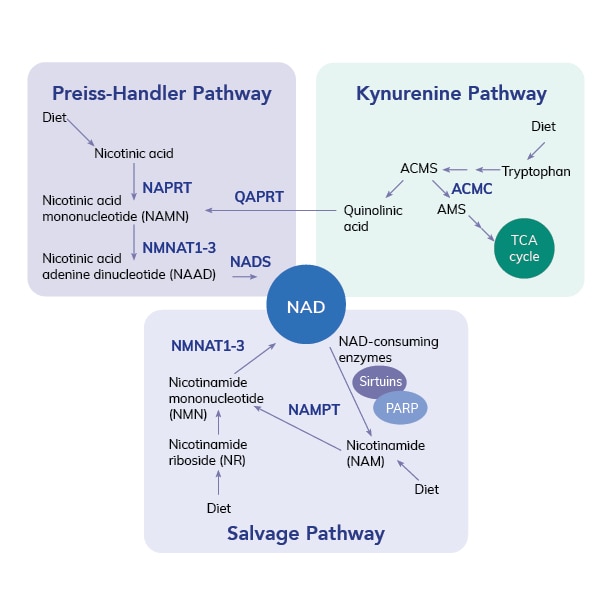
Intracellular NAD+ levels are sustained in 3 ways:
Image adapted from Paro R, Grossniklaus U, Santoro R, et al. Introduction to Epigenetics [Internet]. Cham (CH): Springer; 2021. Chapter 9, Epigenetics and Metabolism. 2021 Mar 24. Available from: https://www.ncbi.nlm.nih.gov/books/NBK585707/doi: 10.1007/978-3-030-68670-3_9. Creative Commons license.
KEY: Nicotinic acid phosphoribosyltransferase (NAPRT), Nicotinic acid mononucleotide (NAMN), Nicotinic acid adenine dinucleotide (NAAD), Nicotinamide mononucleotide adenylyltransferase (NMNAT1-3), 2-amino-3-carboxymuconate semialdehyde (ACMS), Nicotinamide phosphoribosyltransferase (NAMPT), Nicotinamide mononucleotide (NMN)
These pathways collectively regulate the intracellular levels of NAD+, which are essential for maintaining cellular functions and metabolic balance. Understanding the intricacies of NAD+ synthesis and consumption pathways is essential for exploring strategies aimed at modulating cellular metabolism and promoting health.
Maintaining optimal levels of NAD+ is crucial for sustaining tissue and metabolic homeostasis throughout life.
As we age, however, levels of NAD+ naturally decline and many of the enzymes responsible for the degradation and biosynthesis of NAD+ are altered. This can lead to NAD+ degradation exceeding the cells' capacity for de novo synthesis or efficient recycling and salvage of NAM (nicotinamide).1
The age-associated decline in NAD+ may have implications for overall cellular health and longevity.
Naturally occurring NAD+ decline and altered NAD+ metabolism have been implicated in various processes associated with aging.1 Decreased NAD+ levels can affect cognitive function and have other unwanted health outcomes that extend to the cardiovascular, endocrine and immune systems.1,3
Approaches to restore NAD+ levels can support health and vitality in the aging patient. ‡
The decline in NAD+ levels associated with aging underscores its importance in healthy aging. By understanding and potentially influencing NAD+ levels, healthcare practitioners can explore new avenues in promoting cellular health and longevity.‡
Nutrients that enhance the biosynthesis and activity of NAD+ can promote restoration of tissue levels of NAD+ and support overall cellular health. ‡
Resveratrol supports metabolic health by promoting healthy activity of the key enzyme AMP kinase (AMPK)and SIRT1 activity which are positively associated with mitochondrial function.1,2,7,8
Nicotinamide riboside chloride (NR) is a precursor of nicotinamide adenine dinucleotide (NAD+), a key driver of cellular energy production.1,3,4,5,6,7‡
Sulforaphane is one of the most effective activators of phase II detoxification, which occurs primarily in the gut and the liver.8,9
Acetyl l-carnitine supports healthy mitochondrial function and cell membrane stability.10 ‡
Alpha lipoic acid is a key component of the metabolic process, alpha lipoic acid produces energy in muscles and directs calories into energy production.11
Urolithins are unique natural metabolites of intestinal bacteria that are produced by commensal microbiota after consuming foods rich in ellagitannins and ellagic acid — major health promoting constituents of pomegranates, nuts and berries. These unique polyphenols undergo metabolism by intestinal bacteria to small, highly absorbable metabolites called urolithins, which mediate the widely acclaimed health benefits of pomegranates and other ellagitannin-rich foods.12, 13 ‡
Pyrroloquinoline Quinone, or PQQ provides B vitamin-like activity with unique antioxidant properties. PQQ supports mitochondrial, neuronal and cellular function, at least, in part, by activation of Nrf2 and antioxidant gene expression. Preliminary research suggests that PQQ promotes mitochondrial biogenesis by targeting SIRT1 and PGC-1α.14 ‡
Pure Encapsulations® provides uniquely formulated products made with high-quality, pure ingredients backed by verifiable science to complement your plan of care and support healthy aging in your patients.‡
NR Longevity™: specially designed to target biological processes that decline with age, such as the body’s natural ability to make energy, build new mitochondria and protect cells from oxidative stress.1 Nicotinamide riboside (NR), resveratrol and sulforaphane promote healthy aging by replenishing NAD+, enhancing mitochondrial function and providing antioxidant support, respectively.‡
Suggested use: 2 capsules, 1-2 times daily, with or between meals
RENUAL® enhances mitochondrial renewal to support energy output/energy production Features Mitopure™ Urolithin A to power muscle function, increase cellular energy and promote healthy aging.‡
Suggested use: Take 2 capsules, 1-2 times daily, with or between meals.
Ubiquinol-QH 100mg is the active antioxidant form of CoQ10. It supports the production of ATP for energy, promotes cardiovascular health and provides antioxidant support.‡
Suggested use: Take 1 capsule, 1-2 times daily, with meals.
RevitalAge™ Ultra is a scientifically researched combination of acetyl-l-carnitine (ALC) and alpha lipoic acid (ALA) offered with antioxidant and mitochondrial support cofactors. It promotes healthy aging through mechanisms involving gene expression, mitochondrial function, cellular energy production and antioxidant protection. Also contains Nicotinamide riboside (NR) to promote the synthesis of NAD+, a key driver of cellular energy production‡
Suggested use: Take 2 capsules daily, with meals.
Ultra B-Complex w/PQQ combines essential B vitamins with PQQ to support mitochondrial bioenergetics and function. Also provides alpha lipoic acid and luteolin for enhanced antioxidant and cellular support‡
Suggested use: Take 1 capsule, 1-2 times daily, with meals.
NAD+ represents not just a coenzyme in redox reactions but a central player in cellular vitality and health. Its decline with age highlights its critical importance in maintaining cellular integrity and function. As research progresses, harnessing the potential of NAD+ may offer promising clinical strategies for enhancing both longevity and quality of life.
Mitochondrial Health Protocol‡: designed by our clinician partners to help you deliver the most effective care and support for your patients. It includes foundational recommendations for overall health and focused interventions to address common clinical objectives related to mitochondrial function.‡
Drug-Nutrient Interaction Checker: provides valuable information on potential interactions between your patients’ prescriptions, over-the-counter medications and nutritional supplements.
PureInsight™: Our streamlined platform easily collects patient data and provides valuable recommendations to help achieve their health goals.
Virtual Dispensary: our Pure Patient Direct program provides account holders FREE access to our virtual dispensary to help simplify patient sales and reduce in-office inventory.
Discover why some of the most common patient challenges in your practice may be more connected than you think. In this webinar, Dr. Samuel Yanuck will identify and address the multiple connections between cognitive health, brain fog, mast cell activation, occasional fatigue, and other common complaints from patients in your practice.


Samuel F. Yanuck is the CEO and Director of Education for CogenceImmunology.com, an online functional immunology course, serving nearly 10,000 clinician participants from more than 60 countries around the world. He is an adjunct assistant professor of Integrative Medicine, in the Department of Physical Medicine and Rehabilitation at the University of North Carolina School of Medicine. Dr. Yanuck co-directs the Yanuck Center for Life and Health, a functional medicine clinic in Chapel Hill, North Carolina, where he’s been seeing patients from everywhere since 1992. Dr. Yanuck helped co-develop the PureResponse™ exclusive.
+Dr. Yanuck is a paid advisor for Pure Encapsulations.


Skeletal muscle is the predominant tissue in the human body, comprising 40% of overall body weight.1 We rely on our skeletal muscle for numerous physiological functions including movement, maintaining posture, generating force, metabolism and respiration.1
As people age, so do their skeletal muscles.
Age-related muscle decline can begin at age 30.3 More pronounced in sedentary individuals, muscle mass can be lost at a rate of 1% per year.1 Loss of muscle mass can also be accompanied by atrophy of muscle fibers and reduced muscle function and strength. This gradual decrease can progress, with an individual losing up to one-third of their muscle mass by age 80.2
Loss of muscle mass and strength in older individuals could contribute to fall risk, reduced mobility, loss of independence, and ability to perform daily functions.2
Skeletal muscle is a tissue with high energy demands and mitochondria are primarily responsible for meeting this demand. Mitochondria not only power muscle contraction by supplying ATP, they also undertake other critical functions, including moderating intracellular calcium, cell proliferation, apoptotic signaling, regulation of redox states and immune response.1
Well-functioning mitochondria are essential for maintaining cellular homeostasis and muscle health. Cellular mitochondrial health is maintained by growing the mitochondrial pool through mitochondrial biogenesis, through preserving fusion and fission and by ensuring the removal of dysfunctional mitochondria through mitophagy.
Mitophagy is a selective autophagy process that serves as the mitochondria’s own quality-control mechanism and involves removing and recycling dysfunctional mitochondria.2 Mitophagy helps preserve only healthy mitochondria for the mitochondrial pool.
Just as skeletal muscle function can change as the human body ages, mitochondria are also subject to the effects of aging, as shown in the illustration below. These age-associated changes in mitochondria can lead to altered mitophagy 3,4,5,6
When mitophagy is altered, it can lead to the accumulation, rather than clearance, of less-functional mitochondria.
Accumulation of these mitochondria can contribute to energy deficit and changes in the balance between anabolic and catabolic processes — important determinants of muscle mass, function, motor neuron and muscle fiber health.7,8


Mitochondria can quickly adapt to changing conditions triggered by systemic or cellular challenges.3
Supporting mitochondrial function helps reduce loss of muscle mass and function and benefit overall health, specifically by enhancing mitochondrial dynamics and mitophagy.3
Both sedentary and physically active are susceptible to age-related muscle decline, yet the degree of severity is highly variable and dependent upon multiple risk factors beyond mitochondrial health, including hormone and cytokine balance, malnutrition and degree of physical activity.1
Lack of exercise is believed to be the leading risk factor for age-related muscle loss.11
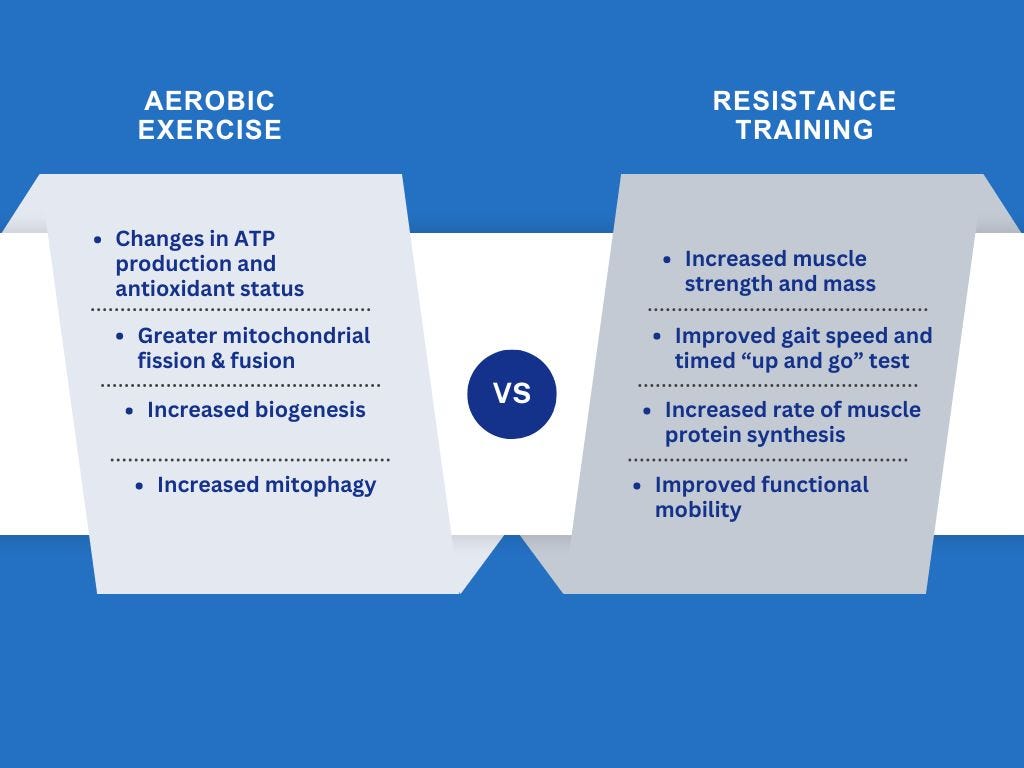
Both resistance and aerobic training have been shown to improve the health of skeletal muscle by impacting mitochondrial quality and increasing muscle strength and function in older patients.1,2,3,11
Individually tailored exercise programs can support healthy aging and be a means of prevention and intervention for age-related muscle decline.


In clinical studies demonstrating the benefits of aerobic, resistance or combined exercises, exercise was performed at least 2-3 times per week, for 30-60 minutes each session, for at least 8-12 weeks.12,13
When recommending exercise as a therapeutic option for patients, the duration of sessions, amount of weight, distance, and number of exercises should increase gradually based on each individual’s capability and improvement.
Forty percent of older individuals do not meet the recommended .8g/kg protein intake requirements in their diet.1 Poor protein intake, combined with decreased absorption and intake of other nutrients that are essential for muscle health like amino acids and vitamins and minerals, put older individuals at a greater risk of reduced muscle protein synthesis or “anabolic resistance”[Ma1] and muscle loss.2 In addition, changes in mitochondrial function that also occur with aging can contribute to oxidative stress and favor catabolism of the muscle.3,4,5
Two ways to support age-related muscle decline in the older patient involve assessing their protein and antioxidant intake. Recommended adequate protein in the older patient is 0.8 gm/2.2 lbs of body weight up to age 65, and 1 gm/2.2 lb of body weight after age 65.6
In a systematic review of 19 observational studies and 9 randomized-controlled trials, Besora-Moreno et al revealed that a higher intake of antioxidant foods was associated with better muscle preservation outcomes.7 A meta-analysis of 4 randomized-controlled trials by the same authors found that that higher fruit and vegetable consumption and supplemental protein each significantly improved.20
Along with adequate protein, a phytonutrient rich diet and exercise, f[Sa1] [AD2] ocusing on nutrients that support cellular, mitochondrial and muscle health can help improve patient outcomes.
Urolithins are unique natural metabolites of intestinal bacteria that are produced by commensal microbiota after consuming foods rich in ellagitannins and ellagic acid — major health promoting constituents of pomegranates, nuts and berries. These unique polyphenols undergo metabolism by intestinal bacteria to small, highly absorbable metabolites called urolithins, which mediate the widely acclaimed health benefits of pomegranates and other ellagitannin-rich foods.1,2 Urolithin A also supports muscle function in preclinical models, improving endurance and exercise capacity in both young and age-related models of muscle decline.3
B vitamins are essential to basal mitochondrial function, serve as metabolic coenzymes and/or methyl donors.‡
PQQ provides B vitamin-like activity with unique antioxidant properties. PQQ supports mitochondrial, neuronal and cellular function, at least in part, by activation of Nrf2 and antioxidant gene expression. PQQ may also help to maintain cytokine balance.‡
Amino Acids are the building blocks for all proteins, making them essential for several body functions, including fluid balance, enzyme production, cellular repair and energy metabolism.4,5 Proper intake of amino acids is important for the synthesis, repair and metabolism of muscle, cells and tissues.‡
Pure Encapsulations® offers high-quality supplements that are FREE FROM unnecessary additives and many common allergens for patients who may need support for age-related muscle changes. We offer nutrients individually and in combination to meet all your patients’ unique needs.
Klean Athlete® and Douglas Laboratories® are Pure Encapsulations partner brands.
Klean Athlete is our dedicated sports nutrition brand designed to power peak performance through optimal health. By harnessing the science of sports nutrition, Klean Athlete delivers safe, NSF Certified for Sport® supplements to support healthy, active lifestyles. Klean Athlete is trusted by over 350 professional and collegiate sports teams, and is the preferred brand of many of the world’s top coaches, trainers and health professionals.‡
Douglas Laboratories has been dedicated to meeting the needs of healthcare professionals for over 65 years. As a globally recognized leader in innovative, science-based nutritional supplements, we strive to support healthcare professionals as they help their patients discover the potential for healthy living, today and in the future.
Renual enhances mitochondrial renewal to support energy output/energy production. Features Mitopure™ Urolithin A to power muscle function, increase cellular energy and promote healthy aging. Research indicates that urolithin A enhances autophagy, the natural process of cellular renewal in which the body degrades and recycles cellular components, as well as mitophagy, the clearance and recycling of older and dysfunctional mitochondria. Resveratrol offers support for longevity, metabolic health, and mitochondrial function.1,2 CoQ10 is a key nutrient used in the energy production pathway.3,‡
Suggested use: Take 2 capsules, 1-2 times daily, with or between meals.
Ultra B Complex w/PQQ combines essential B vitamins with PQQ to support cellular energy production and mitochondrial bioenergetics and function. It also contains alpha lipoic acid and luteolin for enhanced antioxidant and cellular support.‡
Suggested use: Take 1 capsule, 1-2 times daily, with meals.
Muscle Protect with HMB supports healthy muscle mass and function, provides anabolic muscle building support attenuates muscle protein breakdown and preserves lean muscle mass in aging adults. Formulated with clinically studied HMB® and Amino 9™, a leucine-rich blend of essential amino acids (EAAs) combined with vitamin D3 and glutamine.‡
Suggested use: 1 scoop, 1-2 times daily
KLEAN Isolate™ supplies 20 grams of high-quality whey protein isolate in each serving. The dietary protein provided by Klean Isolate™ supplies essential amino acids, including branched chain amino acids that participate in many of the body’s metabolic and physiologic systems. With no additional flavorings or sweeteners, Klean Isolate™ can easily be added to any beverage to enhance daily protein and amino acid intake.‡
Suggested use: Adults take 1 scoop daily mixed with 10-12 oz. of water or other beverage (cool or room temperature), or as directed. For best results, take within 45 minutes after being active.
KLEAN Plant-Based Protein™ by Klean Athlete® supplies a blend of pea and organic brown rice protein to provide amino acids for muscle protein synthesis. ProHydrolase® [De1] enzymes are included to break down protein for increased amino acid absorption and to ease digestion, along with Sunfiber® for gastrointestinal health.‡
Suggested use: 1 scoop daily mixed with 10-12 ounces of water or other beverage, or as directed by a trainer, coach or health professional.
Digestive Enzymes Ultra w/ Betaine HCl contains an extensive profile of betaine HCl and digestive enzymes to support protein, carbohydrate, fat, fiber and dairy digestion while promoting enhanced nutrient bioavailability and absorption. Encourages optimal gastric pH with betaine HCl, which is important for the enhanced digestion of protein and other nutrients for daily wellness and healthy neurotransmitter synthesis.1‡
Loss of muscle mass and strength can significantly impact an individual’s well-being and ability to live independently. Providing patients with targeted, personalized nutrition and exercise interventions to enhance anabolic processes and cellular health can greatly influence their quality of life now, and as they age.
Pure Encapsulations® provides uniquely formulated products made with high-quality, pure ingredients backed by verifiable science to complement your plan of care.
Age-Related Muscle Loss Protocol: designed with our clinician partners to help you deliver the most effective care and support for muscle health.‡
Drug-Nutrient Interactions Checker: Offers scientifically supported, clinically relevant information along with relevant product suggestions.
You can also explore Pure Encapsulations® to find On-Demand Learning, Clinical Protocols, and other resources developed with our medical and scientific advisors.