Amy Doyle, MS, CNS+
Reducing Exposure to Endocrine-Disrupting Chemicals: Counseling Strategies for Clinicians
Table of Contents:
- Key Points
- Patient Concerns with Endocrine-Disrupting Chemicals
- Start with Exposure Reduction
- Major Sources of Endocrine-Disrupting Chemicals
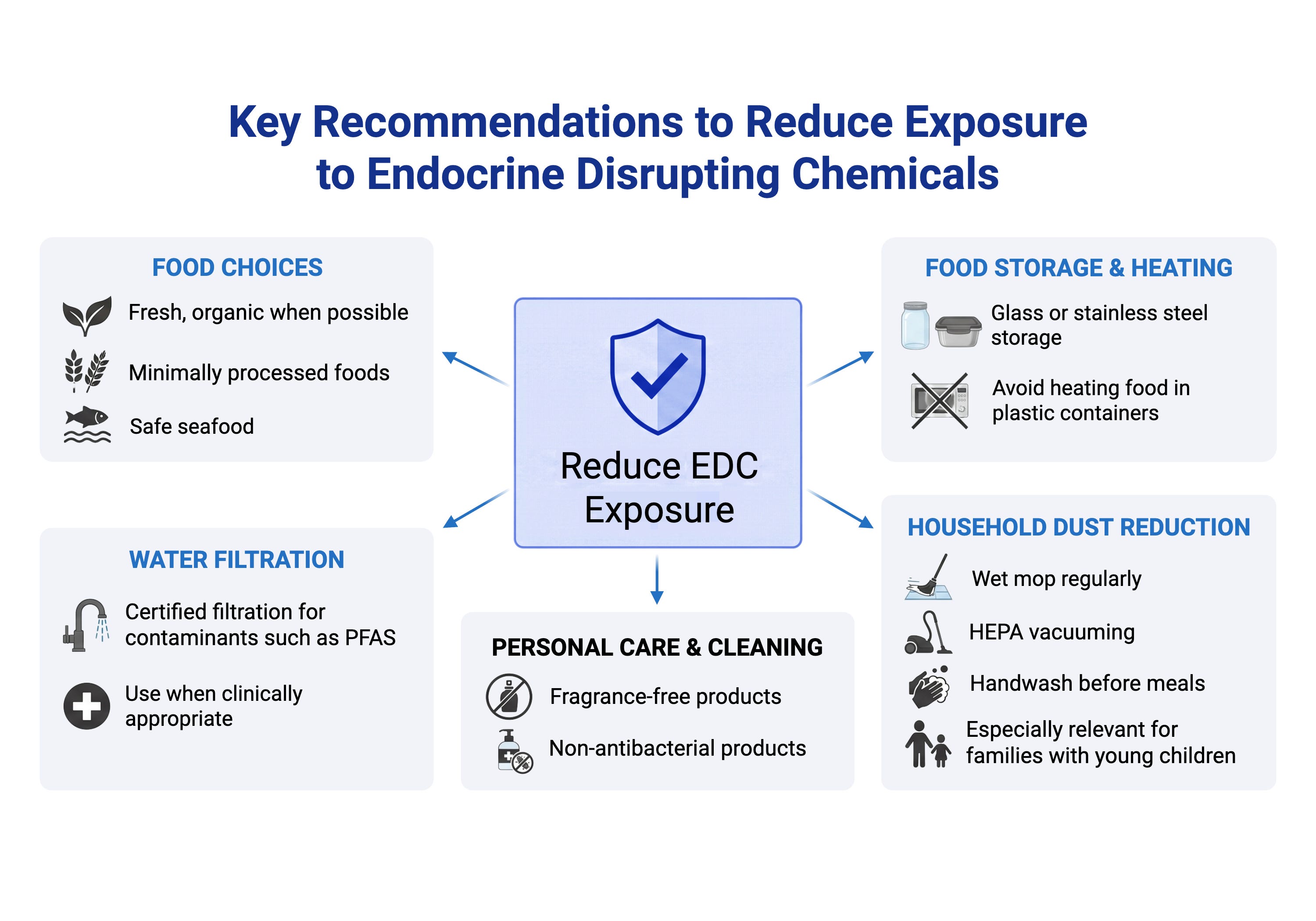
- Key Recommendations to Reduce Exposure
- Optimizing the Body’s Detoxification Pathways
- Clinical Takeaway
- Pure Encapsulations® Nutrient Solutions‡
- Patient Handout
- Resources
Key Points
- Prevention by reducing ongoing exposure remains the cornerstone of managing EDC-related health risks.1,2
- Encouraging a focus on sustainable, high-impact changes can feel more manageable for patients and help build confidence and momentum.
- Optimizing the body’s innate biotransformation and detoxification pathways can effectively support the elimination of toxic chemicals.
Patient Concerns with Endocrine Disrupting Chemicals
As awareness of endocrine-disrupting chemicals (EDCs) continues to grow, many patients are asking clinicians how they can reduce their exposure and "detox" their bodies. While there is no clinical evidence to support detox cleanses or expensive detoxification protocols, there is strong scientific support for counseling patients on exposure reduction and lifestyle strategies that optimize the body's innate detoxification pathways.1,2 Practitioners can address patient concerns by providing practical, achievable recommendations that empower patients without creating unnecessary fear.
Start with Exposure Reduction
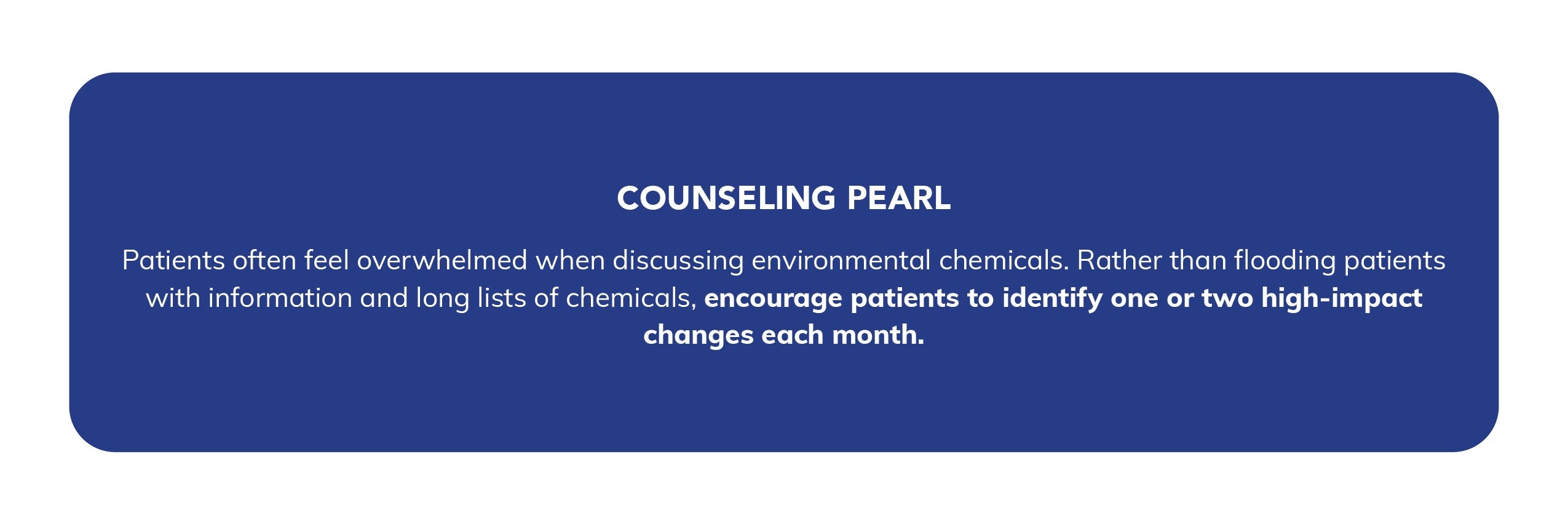
Prevention by reducing ongoing exposure remains the cornerstone of managing EDC-related health risks.1,2 Patients may express overwhelm with feeling they need to eliminate every potential exposure overnight. Encouraging them to focus on sustainable, high-impact changes can make feel more manageable for patients and help build confidence and momentum.
Many patients are surprised to learn that endocrine-disrupting chemicals are found in everyday products they use multiple times each day.
Major Sources of Endocrine-Disrupting Chemicals
| EDC | Source |
|---|---|
| Bisphenols (BPA, BPS, BPF) | Food and beverage can linings, polycarbonate food containers, thermal receipt paper, reusable plastic bottles, food packaging2,3 |
| Phthalates | Food packaging, food processing equipment, vinyl flooring, shower curtains, fragrances, cosmetics, personal care products, medical tubing4 |
| Per- and polyfluoroalkyl substances (PFAS) | Nonstick cookware, grease-resistant food packaging, stain-resistant textiles, waterproof clothing, contaminated drinking water5 |
| Parabens | Cosmetics, lotions, moisturizers, shampoos, makeup, pharmaceuticals, personal care products6 |
| Flame retardants (PBDEs and organophosphate flame retardants) | Upholstered furniture, mattresses, electronics, carpeting, household dust7 |
| Pesticides | Conventionally grown produce, lawn care products, home insecticides, agricultural and occupational exposure8 |
| Triclosan and other antimicrobial chemicals | Some antibacterial soaps, toothpaste, cosmetics and cleaning products7 |
| Heavy metals (lead, mercury, cadmium, arsenic) | Drinking water, certain seafood, tobacco smoke, contaminated soil, older homes, some imported products.8 Although not all heavy metals are classified as endocrine disruptors, several interfere with endocrine signaling and contribute to cumulative toxic burden8 |
Optimizing the Body’s Detoxification Pathways
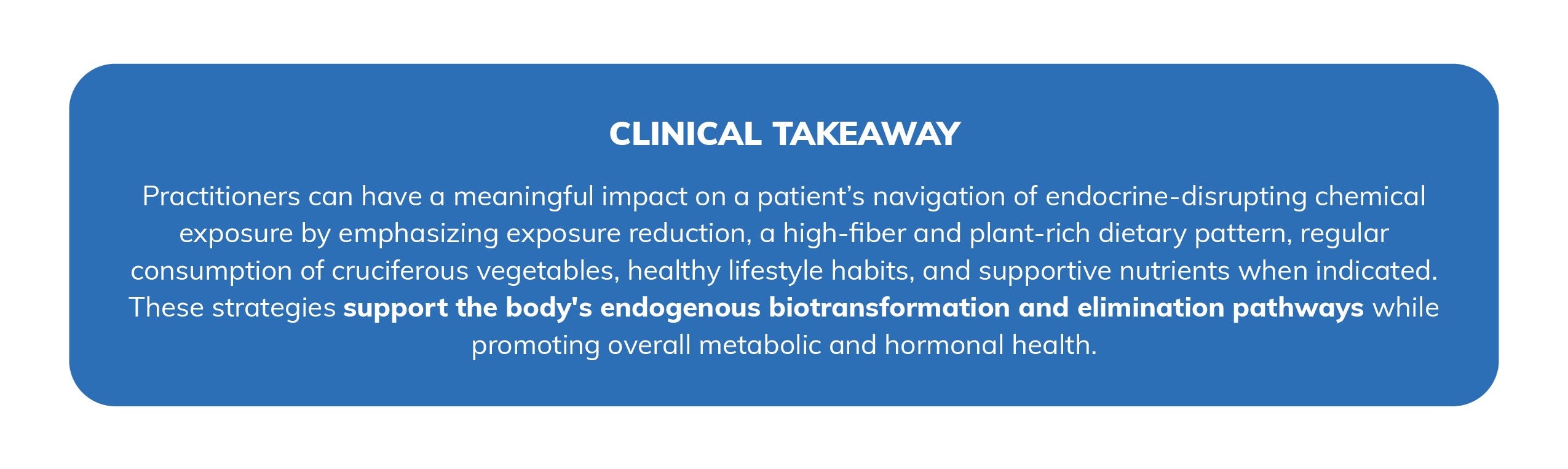
Patients often assume detoxification requires commercial detox, juicing or “cleansing” programs. Instead, explain that the liver, kidneys, gastrointestinal tract, lungs, skin and lymphatic system continuously metabolize and eliminate environmental chemicals. Nutritional recommendations, supportive nutrients and healthy lifestyle habits can help these systems function efficiently.
Encourage Adequate Fiber Intake
Dietary fiber remains one of the most evidence-based nutritional recommendations.9 Fiber supports regular bowel elimination and nourishes the gut microbiome, which plays an increasingly recognized role in xenobiotic metabolism and enterohepatic circulation.9,10,11
Encourage patients to consume 25–38 grams of fiber daily from vegetables, legumes, fruits, nuts, seeds and whole grains whenever tolerated.
Promote a Diverse, Plant-Rich Diet
Phytochemicals from colorful fruits and vegetables may play a key role in supporting physiologic detoxification of endocrine-disrupting chemicals by modulating cellular defense and detoxification pathways.12 Nrf2-activating compounds, particularly glucosinolate-derived isothiocyanates from cruciferous vegetables, can increase the expression of detoxification and antioxidant enzymes involved in the biotransformation of environmental contaminants.12
Rather than focus on individual “superfoods”, encourage patients to consume a diverse, plant-rich diet that includes the regular consumption of cruciferous vegetables including broccoli, Brussels sprouts, cabbage, kale, cauliflower and arugula.
Lifestyle Strategies
Lifestyle factors play a critical role in supporting the body's natural detoxification and elimination processes. Regular physical activity, restorative sleep, stress management, hydration and healthy bowel function help support the physiological systems responsible for transporting and eliminating metabolic waste and environmental compounds.13,14,15,16
Encourage patients to:
- Engage in regular physical activity to support metabolic health and circulation.
- Prioritize seven to nine hours of restorative sleep.
- Maintain adequate hydration to support normal renal function.
- Maintain regular bowel habits, particularly in patients with constipation, to support elimination of metabolized compounds.
These lifestyle strategies provide broad health benefits while also supporting physiologic detoxification.
Pure Encapsulations® Options for Targeted Nutritional Support‡
Ultra Detox 10-Day Pure Pack is a comprehensive daily packet designed to promote liver and G.I. health and function, normal detoxification processes for common, mild environmental heavy metal exposure. Provides core nutrients, broccoli, taurine, NAC, DIM, modified citrus pectin and chlorella.‡
Suggested Dose: 1 packet daily with a meal.
Patient Handout
Ready to help patients take the next step? Download our complimentary patient handout, Your Guide To Reducing Everyday Toxin Exposure, to provide patients with practical, evidence-informed recommendations for reducing toxicant exposure at home, at work, and in daily life. An informed patient is an empowered patient, and small changes can make a meaningful difference over time.
Resources
For additional information that includes diet and lifestyle recommendations for supporting women’s health, refer to the resources listed below:
Environmental Detoxification Support Protocol‡: Designed by our scientific and medical advisors to help you deliver the most effective care to support environmental detoxification.
Stress Management & Relaxation Protocol‡
To learn more about the research on selected nutrient solutions, download the following:
Drug-Nutrient Interactions Checker: Provides valuable information on potential interactions between your patients' prescriptions, over-the-counter medications and nutritional supplements.
You can also explore Pure Encapsulations® to find On-Demand Learning, Clinical Protocols and other resources developed with our medical and scientific advisors.
References
- Trasande L, Sargis RM. Journal of Internal Medicine. 2024;295(2):259-274.
- Vandenberg LN. Expert Review of Endocrinology & Metabolism. 2021;16(3):135-146.
- National Institute of Environmental Health Sciences (NIEHS). Updated March 2026.
- de Paula LCP, J Pediatr (Rio J). 2024;100 Suppl 1(Suppl 1):S40-S47. doi:10.1016/j.jped.2023.
- Brunn H, Arnold G, Körner W, et al. Environmental Sciences Europe. 2023;35:20.
- Nowak K, Ratajczak-Wrona W, Górska M, et al. Mol Cell Endocrinol. 2018 Oct 15;474:238-251.
- Zhu L, Hajeb P, Fauser P, et al. Science of the Total Environment. 2023; 874:162374.
- Hilz EN, Gore AC. New Solutions. 2023;33(2).
- Kieffer DA, Martin RJ, Adams SH. Adv Nutr. 2016;7(6):1111-1121.
- Barber TM, et al. Nutrients. 2020;12(10):3209.
- Hu W, et al. Food Front. 2022; 3:142-9
- Li X, Zang N, Zhang N, Pang L, et al. Chemosphere. 2023 Oct; 338:139522.
- Genuis SJ. Hum Exp Toxicol. 2011;30(1):3-18.
- Nowak N, Gaisl T, Miladinovic D, et al. Cell Rep. 2021 Oct 26;37(4):109903.
- Zhao M, Abbasi AA, Li P, et al. Metab Brain Dis. 2026 Apr 24;41(1):90.
- Asokan, N., & Ullagaddi, R Shodh Sari-An International Multidisciplinary Journal. 2025. 4(4), 3–15.
About the Author

Amy Doyle, MS, CNS, is a board-certified Nutrition Specialist, clinical educator, and content strategist with a passion for advancing evidence-based, functional nutrition. As the founder of White Stone Wellness, a private practice in Fayetteville, NY, she helps individuals optimize their health and vitality through personalized nutrition and lifestyle interventions grounded in both science and patient-centered care. Amy earned her Master of Science in Applied Clinical Nutrition from the Northeastern School of Health Sciences Beyond her private practice, she serves as an educator and content creator within the nutrition and functional medicine communities, translating complex science into accessible, actionable insights for both healthcare practitioners and patients.
+Amy Doyle is an employee of Pure Encapsulations®.